



Le Nez Du Vin The Masterkit 54 aromas
Article: L533
Description
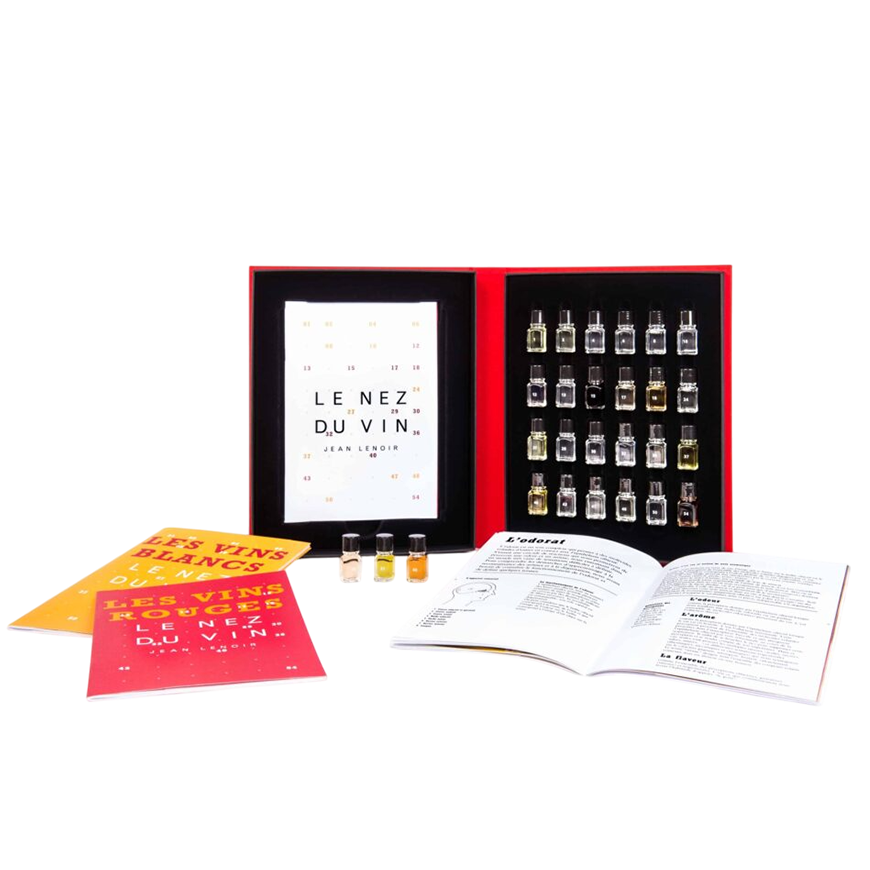
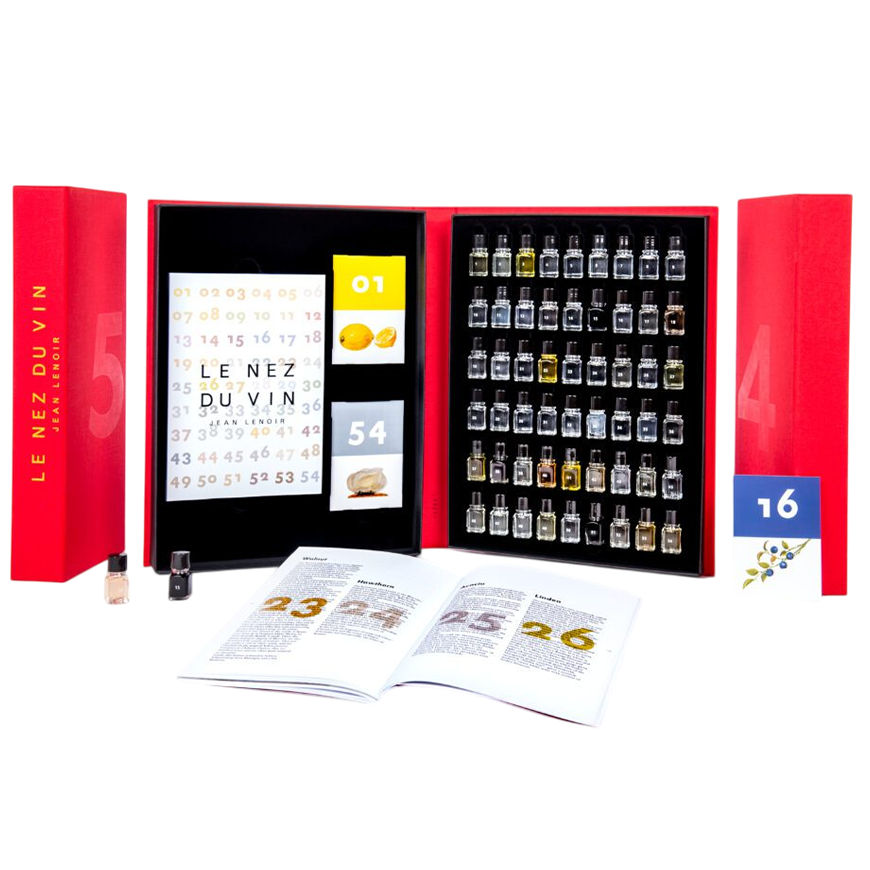
54 aromas that express the rich diversity of wine aromas:
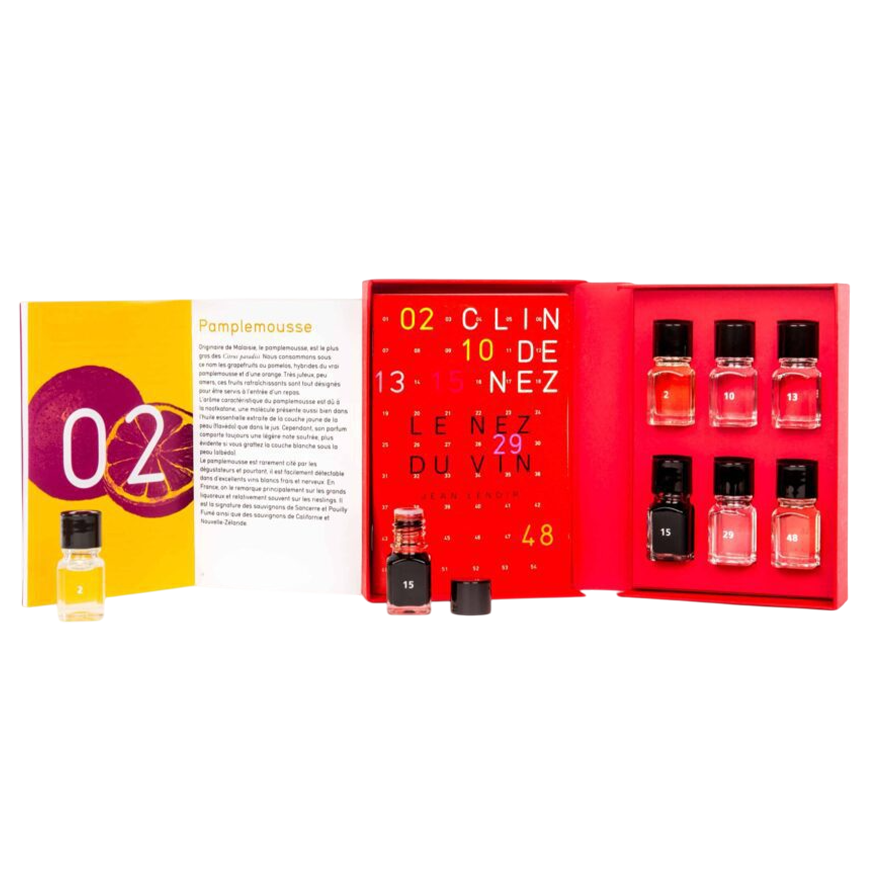
Fruitty notes: 1. Lemon, 2. Grapefruit, 3. Orange, 4. Pineapple, 5. Banana, 6. Lychee, 7. Melon, 8. Nutmeg, 9. Apple, 10. Pear, 11. Quince, 12. Strawberry, 13. Raspberry, 14. Redcurrant, 15. Blackcurrant, 16. Bilberry, 17. Blackberry, 18. Cherry, 19. Apricot, 20. Peach, 21. Marzipan, 22. Prune, 23. Walnut
Floral notes: 24. Hawthorn, 25. Acacia, 26. Linden (Linden Blossom), 27. Honey, 28. Rose, 29. Violet
Vegetal and spice notes: 30. Green (Bulgarian) pepper/paprika, 31 mushroom, 32 truffle, 33 wine lees, 34 cedar, 35 pine, 36 licorice, 37 boxwood (blackcurrant buds), 38 mown hay, 39 thyme, 40 vanilla, 41 cinnamon, 42 cloves, 43 pepper, 44 saffron
Animal notes: 45 leather, 46 musk, 47 butter
Roast notes: 48 toast, 49 roasted almond, 50 roasted hazelnut, 51 caramel, 52 coffee, 53 dark chocolate, 54 smoky note
Additionally
The included book is regularly updated and supplemented under the guidance of experts in neuroscience and oenology. It contains extensive information on the origins of wine aromas and their classification: what forms wine aromas? What information do they provide about the grape variety or blend, the winemaking and aging methods used, and the age of the wine itself?
The book provides an overview of the olfactory system: what are the two olfactory pathways? What happens between the nose and the brain when we smell?
It explains how to use aroma bottles to recognize, remember, and identify aromas in a glass of wine: how and how often should one practice? What are the steps in describing a wine's bouquet?


Le Nez Du Vin The Masterkit 54 aromas
Article: L533

Description
54 aromas that express the rich diversity of wine aromas:
Fruitty notes: 1. Lemon, 2. Grapefruit, 3. Orange, 4. Pineapple, 5. Banana, 6. Lychee, 7. Melon, 8. Nutmeg, 9. Apple, 10. Pear, 11. Quince, 12. Strawberry, 13. Raspberry, 14. Redcurrant, 15. Blackcurrant, 16. Bilberry, 17. Blackberry, 18. Cherry, 19. Apricot, 20. Peach, 21. Marzipan, 22. Prune, 23. Walnut
Floral notes: 24. Hawthorn, 25. Acacia, 26. Linden (Linden Blossom), 27. Honey, 28. Rose, 29. Violet
Vegetal and spice notes: 30. Green (Bulgarian) pepper/paprika, 31 mushroom, 32 truffle, 33 wine lees, 34 cedar, 35 pine, 36 licorice, 37 boxwood (blackcurrant buds), 38 mown hay, 39 thyme, 40 vanilla, 41 cinnamon, 42 cloves, 43 pepper, 44 saffron
Animal notes: 45 leather, 46 musk, 47 butter
Roast notes: 48 toast, 49 roasted almond, 50 roasted hazelnut, 51 caramel, 52 coffee, 53 dark chocolate, 54 smoky note
Additionally
The included book is regularly updated and supplemented under the guidance of experts in neuroscience and oenology. It contains extensive information on the origins of wine aromas and their classification: what forms wine aromas? What information do they provide about the grape variety or blend, the winemaking and aging methods used, and the age of the wine itself?
The book provides an overview of the olfactory system: what are the two olfactory pathways? What happens between the nose and the brain when we smell?
It explains how to use aroma bottles to recognize, remember, and identify aromas in a glass of wine: how and how often should one practice? What are the steps in describing a wine's bouquet?